
The New US Dietary Guidelines
New dietary guidelines makes sense, but not to everyone.
1/10/20262 min read
Health Secretary, Robert F. Kennedy Jr., and Agriculture Secretary, Brook Rollins, unveiled the latest dietary guidelines, which is already drawing criticism for its ties to the meat and dairy industry. My question is: why the criticism?
Meat and dairy is what I live on. I’m 67, and have never been to a doctor for a diet-related health issue. Meat and dairy is real food; it’s not the garbage that gets packed into cans and boxes and comes with worthless nutrition labels and a long list of fake ingredients.
The new guidelines are critical of added sugars and highly processed foods… as it should. It encourages people to drink less alcohol and to eat more protein… as it should; protein is vital for strength. While it has been accused of embracing saturated fats, zero change has been made for how much is permissible – no more than 10 percent of total daily calories.
The new guidelines say “no amount of added sugars or non-nutritive sweeteners is recommended.” It also recommends that added sugars should equal no more than 6 percent of total calories, down from the previous 10% recommendation. Good! America hasn’t become one of the fattest nations in the world because we eat healthy… because we don’t. Added sugar is linked to many diseases, including diabetes.
The guidelines have earned praise from the American Medical Association, as it directly addresses highly processed foods for the first time. While the guidelines don’t provide a clear definition of what constitutes highly processed foods, or how consumers can identify them, they do offer some broad examples, Newsflash! Here’s how you know something is processed. If you can’t hunt it and kill it, or pluck it from the ground, it’s probably processed.
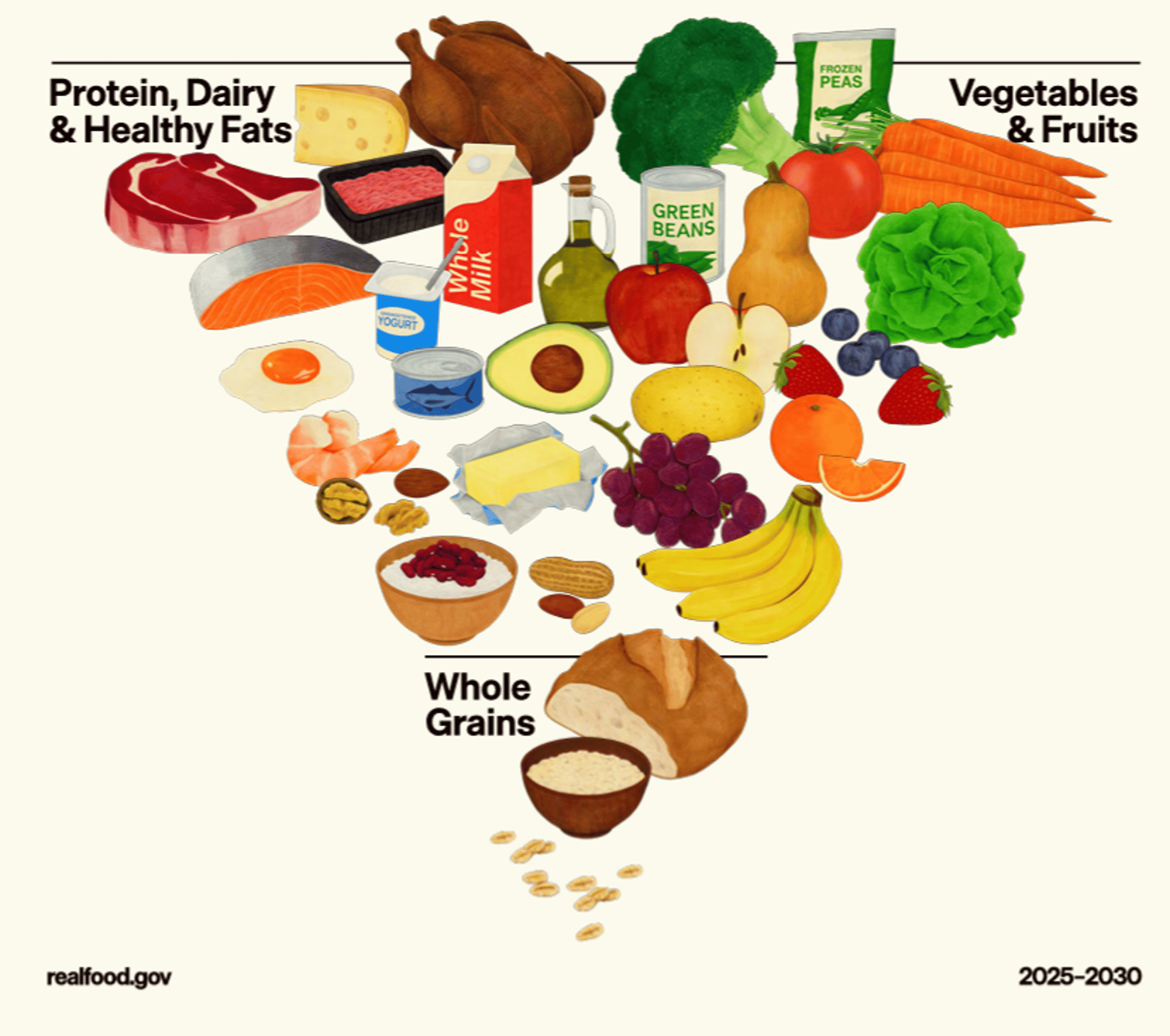
The new food pyramid is more like a funnel. The wide top of the funnel includes a large slab of red meat, a wedge of cheese, a whole roasted bird, broccoli, carrots, and a bag of frozen peas. As it tapers downward, it includes whole milk and unsweetened yogurt. It also includes olive oil and a stick of butter, as well as fruits and nuts, and then ends with whole grains… once again, as it should.
Do I have my share of guilty pleasures? Sure! However, most of what I eat is on that pyramid. Again, I’m 67, with no diet-related health issues. I must add, though, I’ve always had a physically active job, which leads to the next paragraph.
In a response, the American Heart Association said it was concerned about the guidelines, noting that saturated fats, along with salt, are the “primary drivers of cardiovascular disease.” While that may play a role, the “cardio” in cardiovascular, exists for a reason. If one sits on their butt all day, with little to no cardio activity, one should expect cardiovascular disease.
Finally, we have a food pyramid critical of all the garbage far too many of us consume. Finally, we have a pyramid that encourages us to eat real food. Anyone who doesn’t like it… probably earns a living off your bad health. Follow the money!
Source used: arstechina.com